
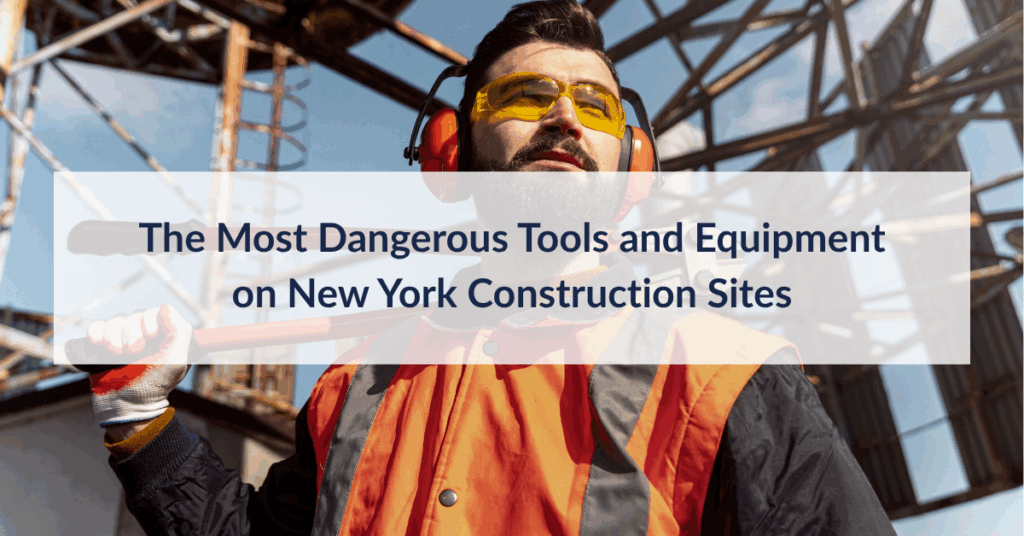
Every year, thousands of New York construction workers are injured by dangerous tools and equipment, such as malfunctioning power tools, unstable ladders, and heavy machinery. These accidents often happen quickly and without warning, but many are preventable with proper safety practices and oversight.
Construction workers are generally covered by New York workers’ compensation insurance when they get hurt on the job. However, depending on the circumstances of the accident, third parties like property owners, other contractors, or manufacturers of defective tools and equipment may be held liable in separate personal injury claims.
If you’ve recently been injured while working on a New York construction site, experienced New York work injury lawyer Paul Giannetti is here to help you understand your legal rights and explore your options for compensation. Call our Albany workers’ compensation law firm today at (518) 346-7777 to discuss your construction site injury case in a free consultation.
Common Hazardous Tools on New York Construction Sites
Even small, everyday construction tools can cause serious injuries when something goes wrong. Some of the most common hazardous tools in New York construction injury cases include:
- Power tools like circular saws, grinders, and nail guns can slip, jam, or misfire when they’re worn down or handled in awkward positions.
- Hand tools like utility knives, hammers, and chisels can become dangerous if their blades get too dull or their handles become loose after heavy use.
- Electrical tools can be hazardous when cords become frayed, plugs loosen, or temporary power setups start to deteriorate over time.
Many construction injuries happen not because the tools are unfamiliar, but because they’re used so routinely that early warning signs are often ignored.
Construction Equipment With High Injury Rates
Machines that move people or materials can cause severe injuries, even when everyone is paying attention. On crowded construction sites, communication, maintenance, and timing matter just as much as the equipment itself.
Some common examples of dangerous construction equipment include:
- Heavy machinery, such as forklifts, skid steers, and excavators, can pin or strike workers when visibility is limited or communication breaks down.
- Ladders and scaffolding often contribute to fall injuries when they shift on uneven ground, become slick due to rain or snow, or aren’t set up properly.
- Cranes and hoists can be dangerous when loads are rigged incorrectly, catch sudden wind, or shift unexpectedly once they’re in the air.
When equipment this powerful is being used, even small mistakes can result in life-changing or even fatal injuries.
Common Construction Site Injuries and Their Causes
Construction injuries vary widely, but many are tied to the tools and equipment workers rely on every day. Some of the most frequent construction injuries include:
- Lacerations, crush injuries, fractures, and amputations, often caused by sharp blades, pinching points, or heavy machinery.
- Electrical burns and electrocution, typically linked to energized tools, damaged cords, or exposed wiring.
- Head and brain injuries, including concussions and traumatic brain injuries from falling objects or unexpected impacts.
- Repetitive strain injuries, which develop over time from vibrating tools, heavy lifting, or constant overuse.
These injuries rarely come out of nowhere. Many start with equipment that hasn’t been properly maintained. Others happen when workers aren’t given proper guidance or supervision. Electrical incidents often connect back to poor lockout/tagout practices, where power sources aren’t fully shut off before repairs or adjustments. And when heavy machinery is operated by someone without the right training, the risk of a major incident increases dramatically.
Injury Prevention Tips for Construction Workers and Employers
Many construction injuries can be avoided when both workers and employers stay consistent with basic safety habits. Some of the most effective ways to prevent construction injuries include:
- Regular inspections and maintenance to make sure tools and equipment are in safe working condition.
- Proper protective gear, such as gloves, hard hats, safety glasses, steel-toe boots, and fall protection equipment when working from heights.
- Clear safety rules for power tools, including when guards should be used, who can operate certain machines, and how equipment should be stored.
- Thorough training, ensuring workers understand how tools work, what hazards to look for, and what to do in an emergency.
These measures don’t eliminate every risk, but they drastically reduce the chances of a serious accident on a New York construction site.
Construction Safety Regulations and Standards
Construction work is inherently risky, but job sites are governed by rules that are designed to keep that risk under control. These state and federal regulations set clear expectations for employers, outline minimum safety practices, and give workers protections when something goes wrong.
OSHA Regulations That Apply to New York Construction Sites
OSHA sets the standards for construction site safety nationwide. These federal rules cover the essentials, such as how tools should be guarded, how scaffolding should be constructed and inspected, the training workers must receive, and the procedures employers must follow to prevent falls, electrocutions, and equipment-related injuries. OSHA also requires regular site inspections and hazard assessments. When an accident occurs, OSHA investigations may determine whether an employer followed these required steps or ignored warning signs.
New York State Construction Standards and Protections
New York law gives construction workers protections that go beyond federal OSHA guidelines.
Labor Law §240 – the “Scaffold Law”
Section 240 requires owners and contractors to provide proper safety devices – such as scaffolds, ladders, hoists, and slings – for work involving elevation or the risk of being struck by falling objects. If an injured worker can prove a statutory violation and proximate cause, this law will assign responsibility to owners and contractors for gravity-related injuries (such as falls or being hit by falling materials). This statute allows injured workers to recover against parties other than their immediate employer.
Labor Law §241(6) and the Industrial Code (Part 23)
Section 241(6) makes it unlawful to fail to provide reasonable and adequate protection in construction, excavation, and demolition work, and it is explicitly tied to the detailed safety rules in the New York Industrial Code (Part 23). A violation of a specific Industrial Code rule (such as a scaffold or ladder provision in Part 23) can be used as the basis for a §241(6) claim. While §240 focuses on elevation risks, §241(6)/Part 23 covers a broad array of site conditions and safety practices defined by the rule.
Labor Law §200
Labor Law §200 says that owners and general contractors have to keep the work environment reasonably safe, not just for their own employees, but for anyone working on the site.
In practice, courts look at how much control the owner or contractor had over the situation that caused the injury. If they control the work being done, they can be held responsible when something goes wrong. If the problem was a dangerous condition on the property, they can also be held liable if they knew about it (or should have known) and failed to fix it.
Construction Employer Responsibilities
Construction employers are responsible for creating an environment where workers can do their jobs without facing avoidable dangers. That starts with giving workers proper training on tools, machinery, electrical hazards, and job-specific risks. It also includes providing dependable safety gear and replacing it when it’s worn and damaged.
They’re equally responsible for keeping the site itself safe. That means maintaining equipment, enforcing OSHA rules and New York’s Industrial Code requirements, and making sure hazardous tasks are supervised. If equipment or tools are unsafe for use or safety procedures aren’t followed, employers are expected to fix the problem before someone gets hurt.
Construction Worker Rights and Responsibilities
Construction workers in New York have strong protections when it comes to job site safety. Every worker has the right to a safe environment, the right to receive proper training, and the right to use functioning protective equipment. Workers can also report unsafe conditions without fear or retaliation. State and federal laws make it illegal for employers to punish someone for raising a safety concern or filing an injury claim.
Workers also play a role in maintaining a safe site. They’re expected to follow safety procedures, use protective gear correctly, and report hazards when they notice something is off. When an injury does happen, employees have the right to prompt medical care and to file a workers’ compensation claim, regardless of who was at fault. Reporting the injury quickly and keeping documentation helps protect their benefits and legal options.
Product Liability Claims for Defective Construction Tools and Equipment
In some construction injury cases, the tool or machine itself is the problem. When a power tool, ladder, harness, or piece of heavy machinery fails because it was poorly designed, improperly manufactured, or sold without clear warnings, the injured worker may have grounds for a product liability claim against the company that made or distributed it.
These cases go beyond workers’ compensation. Product liability claims can help workers recover damages that workers’ comp doesn’t cover, such as pain and suffering or long-term disability impacts.
Construction workers who are injured by defective tools or equipment should preserve the defective product, take photos, and document how the failure occurred. Additionally, it is generally best to contact an experienced New York work injury lawyer to discuss your legal options.
Contact Our Albany Construction Worker Injury Lawyers
Construction work will always involve risk, but many of the most serious injuries on New York job sites are preventable with the right training, equipment, and oversight. If you’ve been injured on a construction site in Albany or anywhere else in New York, you don’t have to seek the compensation you deserve on your own. Contact Albany work injury lawyer Paul Giannetti at (518) 346-7777 to discuss your options in a free consultation.
Related: Understanding Light-Duty Work Restrictions in Workers’ Compensation